
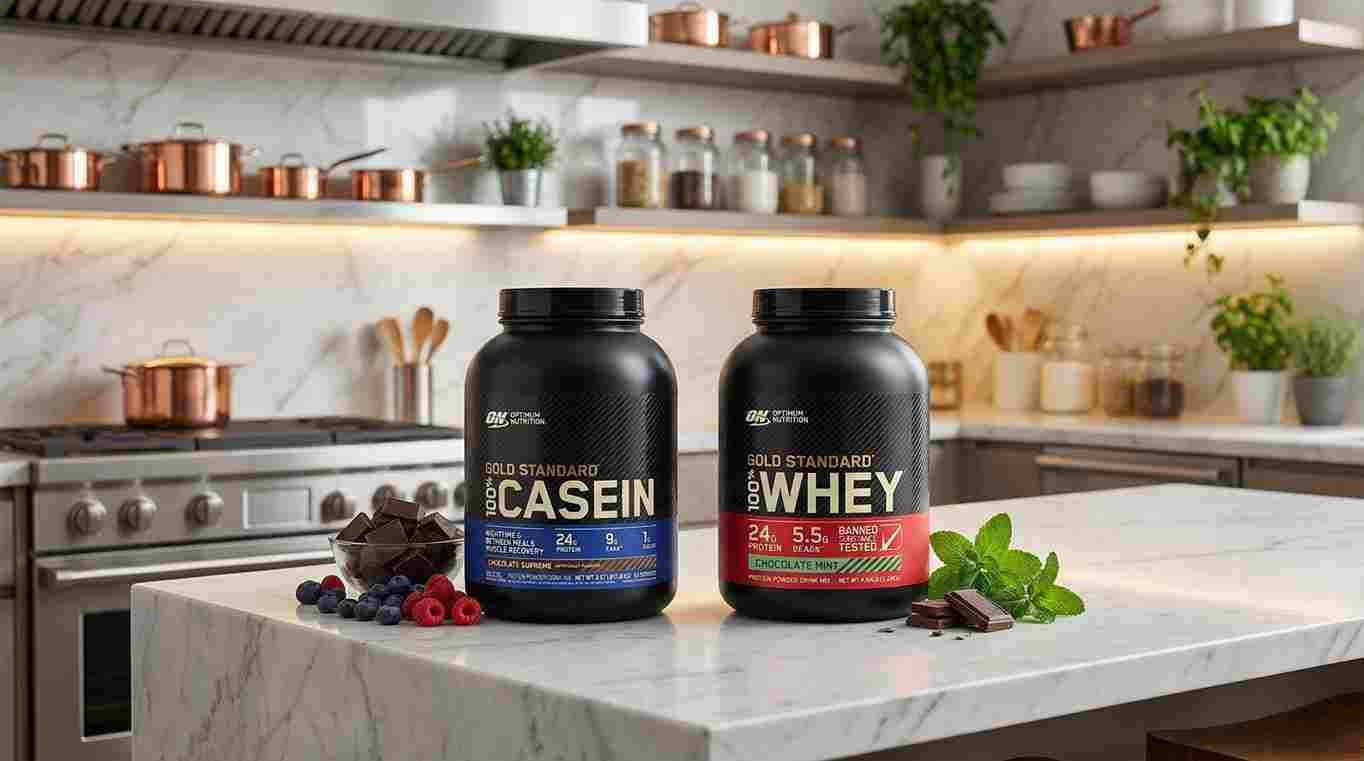
Whey vs. Casein: The Biohacker’s Guide to Hacking Protein Timing

We may earn a commission if you buy through our links. This helps support our research.
This Whey vs. Casein breakdown isn’t just about milk powder; it’s about signal management. While the average gym-goer treats protein like a generic fuel, the high-performance athlete knows that digestion speed and amino acid release curves are the levers that flip the “Anabolic Switch.”
If you’re looking to optimize your daily protein strategy, you need to understand the difference between the “Spike” and the “Shield.”
Whey vs. Casein Differences: Spike vs. Shield
Both whey and casein are high-quality milk-derived proteins, but they move through your system at wildly different speeds. Whey is the “Easy Button” for rapid delivery, while casein forms a physical gel in your stomach, creating a slow, sustained release of amino acids. Think of Whey as a lightning strike and Casein as a steady rain.
In short: In this Whey vs. Casein comparison, whey protein is your post-workout “Anabolic Trigger,” whereas casein protein is the overnight “Insurance Policy” to keep your body from cannibalizing its own muscle tissue during sleep.
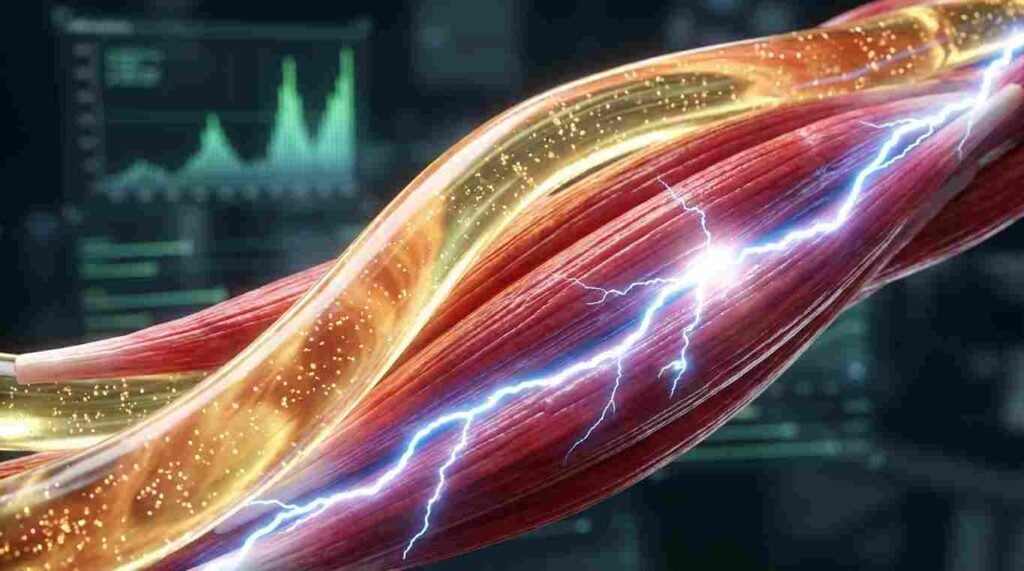
Whey vs. Casein Digestion: The Absorption Speed Test
Maximizing the anabolic window through strategic protein selection:
- Whey Protein: Elite MPS Stimulation | Minimal Catabolic Shield
- Casein Protein: Moderate MPS Stimulation | Elite Catabolic Shield
Whey vs. Casein for Muscle Synthesis vs. Breakdown
Maximizing the anabolic window through strategic protein selection:
- Whey Protein: Elite MPS Stimulation | Minimal Catabolic Shield
- Casein Protein: Moderate MPS Stimulation | Elite Catabolic Shield
Hunger Management & Nighttime Support
Surviving the fasted state without losing hard-earned gains:
- Whey Protein: Low Satiety Index | No Sleep Support
- Casein Protein: High Satiety Index | 7+ Hours Sleep Support
Protein Comparison: Selecting Your Tactical Protein
⚡ Whey Protein (The Spike)
- Post-workout Recovery: Fastest absorption to start repair immediately.
- Rapid Amino Delivery: Spikes blood amino acid levels in <40 mins.
- General Convenience: Mixes easily with water (no clumps).
- Low Satiety: You will be hungry again in 60 minutes.
- No "Shield": Does not protect muscles during long fasts (sleep).
🛡️ Casein Protein (The Shield)
- Overnight Protection: Forms a "gel" in the gut for 7-hour release.
- Intermittent Fasting: Helps you feel full longer during feeding windows.
- Anti-Catabolic: Prevents muscle breakdown during sleep.
- Texture: Can be thicker and "grittier" than whey.
- Lower Peak: Doesn't spike insulin/leucine as high as Whey.
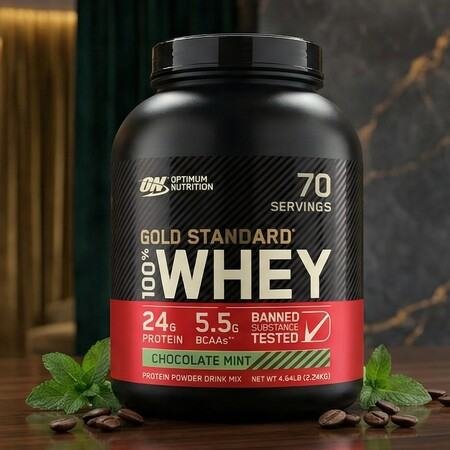
100% Whey Gold Standard®
+ Muscle support¹
+ Post-workout recovery¹
+ 100% whey protein powder
+ 24g protein per serving
+ 5.5g BCAAs per serving
+ Protein Isolate is the No. 1 ingredient
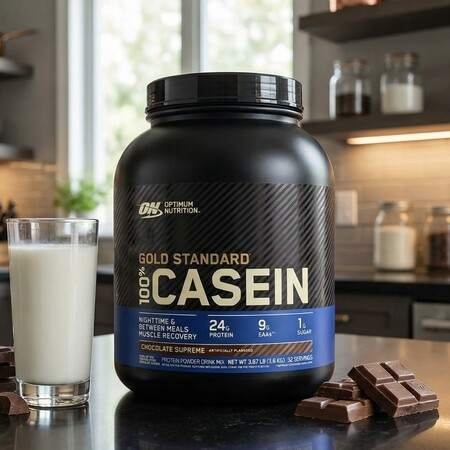
Gold Standard 100% Casein Protein Powder
+ Supports muscle recovery at nighttime & between meals
+ 24g protein per serving
+ 100% of the protein from micellar casein
+ Slow digesting protein (when compared to whey protein)
+ 9g EAAs per serving⁶
+Excellent source of magnesium & zinc
Whey vs. Casein: Selecting Your Tactical Protein
When choosing between Whey vs. Casein, consider your timing:
Whey Protein (The Sprint)
- Rapid Bio-availability: Hits the bloodstream in 20-40 minutes.
- Leucine Signal: The fundamental trigger for muscle protein synthesis (MPS).
- Short-Term Surge: Massive anabolic spike that levels off quickly.
- Best Use: Immediately post-training or upon waking.
Casein Protein (The Marathon)
- Sustained Release: Prevents the “Anabolic Cliff” by providing a steady trickle of aminos.
- Anti-Catabolic Efficiency: Most effective at reducing muscle breakdown.
- Nighttime Optimization: Blocks the catabolic effect of 8 hours of sleep fasting.
- Satiety Hack: Stays in the stomach longer, reducing “phantom hunger.”
Whole Foods vs. Engineered Convenience
While meat, eggs, and dairy provide a complex matrix of micronutrients, protein powders are precision instruments. They allow you to “hack” your digestion speed in ways that whole foods (which require significant mechanical breakdown) simply cannot. Don’t replace your steak; replace the timing of your protein delivery.
FAQ
Can I mix Whey and Casein together?
Yes. This is often called the “Hybrid Protocol.” By mixing them, you get the best of both worlds: the immediate leucine spike from Whey to start repair, and the slow-release trickle from Casein to sustain it. This blend is excellent for a mid-day meal replacement.
Which protein is better for fat loss?
Casein generally wins for fat loss because of the “Satiety Factor.” Because it gels in your stomach and digests slowly, it keeps you feeling full for hours, effectively killing cravings and preventing snacking.
I get bloated when I drink protein. What should I do?
“Digestive noise” (bloating/gas) is usually caused by lactose or cheap fillers.
-
The Fix: Switch to Whey Protein Isolate (Hydrolyzed). It is filtered to remove almost all lactose and fat. Avoid “Whey Concentrates” if you have a sensitive gut.
Is the "Anabolic Window" actually real?
It is not a strict 30-minute “do or die” window, but it is a period of heightened sensitivity. Your muscles are primed to absorb nutrients like a sponge after training. While you won’t lose your gains if you wait, consuming Whey Protein within 60 minutes is the optimal move for signal management.
Does Casein really work while I sleep?
Yes. Studies show that consuming casein before bed increases overnight muscle protein synthesis rates compared to a placebo. It acts as an anti-catabolic shield, ensuring your body has a steady supply of amino acids to repair tissue during your 7-8 hour fast (sleep).
Scientific References & Evidence